Carrier System Leaking Water in Woodland Hills
Quick read: Water under a Carrier air handler in Woodland Hills almost always traces to a clogged condensate drain, a failed pump, or a stuck float switch, so call Woodland Hills Carrier HVAC at (213) 513-5256 or book online across 91367 for a $150 to $450 drain-and-switch visit before water reaches the drywall. We cover Warner Center to Carlton Terrace.
Quick details
- Leak sources: condensate drain pan, drain line, condensate pump, float switch
- Float switch opens the Y circuit to stop cooling, not a numeric code
- Drain clear / switch test: typically $150 - $450
- Condensate pump replacement: similar lower-range cost
- Catch early to avoid pan rust and drywall damage
- Service area 91364, 91367, 91371; open daily 7am-9pm
- Independent, all brands
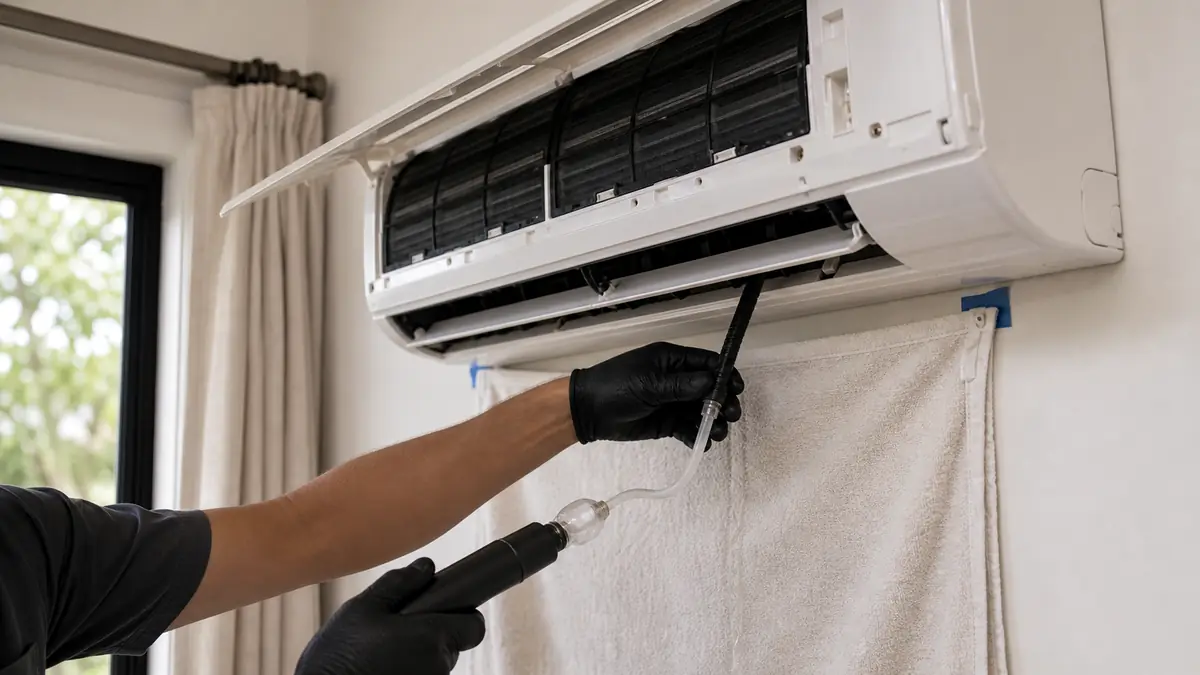
Where is the water actually coming from?
A central Carrier system pulls humidity out of the air, and that water collects in the evaporator pan and drains away. When you see water, the drain side has failed somewhere: the primary drain line is clogged with algae or dust, the secondary pan is overflowing, or, on a system that lifts condensate to a higher drain, the condensate pump has quit. The refrigerant circuit itself rarely drips water; that is condensate, not a refrigerant leak.
What should the float switch be doing?
| Symptom | Likely cause / first check | Cost lane |
|---|---|---|
| Water in pan, cooling still runs | Float switch bypassed or stuck closed | $150 - $450 |
| Cooling cut out, water nearby | Float switch did its job; clear the drain | $150 - $450 |
| Water only on humid days | Partial clog; slow drain backing up | $150 - $450 |
| Water at a lifted-drain system | Failed condensate pump | $150 - $450 |
| Rust, stains, drywall damage | Long-running leak; add restoration | Diagnose first |
A correctly wired float switch opens the 24-volt Y circuit and stops cooling before the pan overflows. If your unit keeps cooling while water pools, someone may have bypassed that safety, which we correct.
Why is this common in Woodland Hills?
Many Warner Center condos and older Walnut Acres ranches route condensate drains through long, nearly flat runs that clog easily with dust and biofilm. Heavy summer cooling produces a lot of condensate, and a marginal drain that coped in spring backs up under July load. Attic-mounted air handlers, common in the 1960s tract homes, make a slow leak especially damaging because it drips through the ceiling before anyone notices.
How does a tech diagnose a Carrier condensate leak, step by step?
The goal is to find why the drain failed, not just mop up, so the leak does not come back in three weeks. A typical visit runs in this order.
- Confirm it is condensate, not refrigerant. Standing water at the air handler is condensate; a hissing, cooling-losing system is refrigerant. If the coil was iced, we check the charge too.
- Find the overflow point. We check the primary drain pan, the secondary pan, and the drain line outlet to see where the water actually backs up.
- Clear and flush the line. We pull the trap, vacuum or flush algae and biofilm from the line, and confirm water runs freely to the termination.
- Test the float switch. We raise the float to verify it opens the 24-volt Y circuit and stops cooling; a bypassed or stuck switch is corrected so it protects the ceiling next time.
- Verify pitch and the pump. We confirm the drain is sloped toward the exit and, on a lifted-drain system, test the condensate pump and its safety float.
What can I safely check myself before booking?
A few safe steps can confirm the problem and limit damage. Shut the system off at the thermostat to stop adding condensate, place a bucket or towels under the drip, and look at the drain line outlet outside, a dry outlet on a humid day means the line is clogged upstream. If you can reach it safely, a wet/dry vacuum on the outdoor drain outlet sometimes pulls a clog clear. What needs a tech: anything in the attic around a live air handler, testing or replacing the float switch, and replacing a condensate pump. If the line will not clear or the switch is suspect, book a Carrier repair rather than bypassing the safety.
What does the repair involve, and what does it cost?
We clear the drain line, flush the trap, confirm the pan drains freely, test or replace the float switch, and verify the condensate pump where one is fitted. We also check that the drain pitch is correct so it does not re-clog in weeks, and if a leak has been running we inspect for pan rust and coil corrosion. The cost lanes:
- Drain clear and float-switch test ($150-$450). The most common visit; mostly trip and labor.
- Condensate pump replacement ($150-$450). Similar lower-range cost when a lifted-drain pump has failed.
- Secondary drain pan with its own switch. A cheap add-on we sometimes recommend on attic units as insurance against ceiling damage.
- Drywall or pan restoration - diagnose first. A long-running leak that rusted the pan or stained a ceiling adds restoration to the job, which is why catching it early matters.
For a neighborhood-specific version, see water leaking in Walnut Acres, or the broader AC not cooling page.
Common questions
Why is water dripping from my Carrier air handler?
On a cased coil the usual cause is a clogged condensate drain backing up into the pan, a failed condensate pump, or algae growth in the line. The float or safety switch should cut cooling before water overflows; if it leaks anyway, the switch may be bypassed or stuck. We clear the line and test the switch.
Will a clogged drain shut my Carrier AC off?
It should. A working float switch opens the 24-volt Y circuit when the pan fills, stopping cooling to prevent water damage rather than throwing a numeric Carrier code. If your system quit cooling on a humid day and there is water nearby, suspect the condensate side before the refrigerant side.
How much does a condensate leak repair cost in Woodland Hills?
Clearing a clogged drain and testing the switch typically runs in the lower service range, often $150 to $450. A failed condensate pump replacement is similar. If water has been leaking long enough to rust the pan or damage drywall, that adds to the job, so it pays to catch it early.
Could the water be a refrigerant leak instead of condensate?
Almost never. Refrigerant is a gas at room temperature, so a refrigerant leak hisses and loses cooling, it does not pool water. Standing water at the air handler is condensate the system pulled out of the air and failed to drain. The one overlap is an iced coil from low refrigerant: when it thaws it can dump water past the pan, so we check the charge if the leak comes with weak cooling.
Is it safe to keep running my Carrier AC while it leaks water?
Briefly, no. A working float switch should already have cut cooling; if it has not and water is pooling near an attic air handler, shut the system off at the thermostat to stop adding condensate, because a slow attic drip can ruin drywall and insulation before you notice. Then book service. Running it is only risking water damage, not saving you anything.